How to Create a Cohesive Paint Colour Scheme Throughout Your Home
Choosing a paint colour for one room can be difficult enough.
Choosing colours for an entire home introduces another challenge: making the different spaces feel connected.
Every room does not need to be painted exactly the same colour. A little variation adds personality.
The trick is choosing colours that work together so moving from one room to the next feels natural rather than disconnected.
Start With the Fixed Finishes
Before choosing wall colours, look at the parts of the home that are not changing.
Flooring, benchtops, cabinetry, tiles, stone, curtains and large furniture pieces all influence which paint colours will work well.
If most of these elements have warm tones, a very cool wall colour may feel out of place.
Likewise, a home with cooler grey flooring and crisp finishes may suit a cooler colour palette.
Paint should work with the surroundings rather than being chosen in isolation.
Choose a Main Neutral
One of the easiest ways to create flow throughout the home is to choose a main neutral colour.
This might be a white, cream, greige, beige or soft grey.
Use the main neutral in hallways, open-plan areas or other connecting spaces.
From there, additional colours can be introduced in bedrooms, living rooms or feature areas while still maintaining an overall sense of continuity.
Pay Attention to Undertones
Undertones become particularly important when several colours are used throughout the house.
Two colours might both appear neutral on their own but clash when placed beside each other because one has a warm yellow undertone and the other has a cool blue undertone.
Keeping undertones consistent can help different colours work together.
That does not mean every colour has to match perfectly.
They simply need to feel as though they belong in the same overall palette.
Consider Sightlines
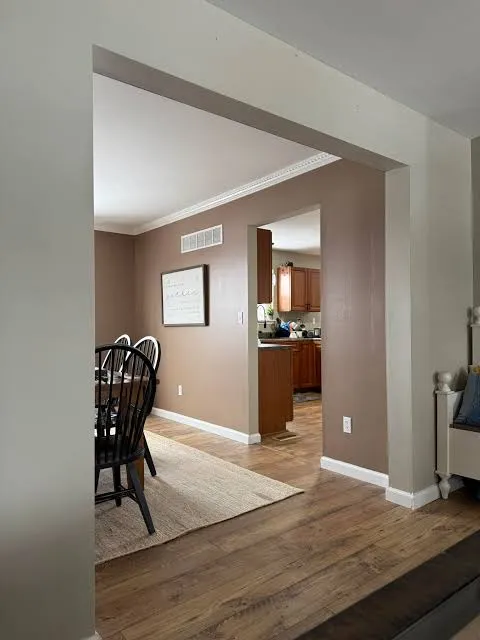
Think about which rooms can be seen from one another.
In open-plan homes, you may be able to see the kitchen, dining area, living room and hallway from one position.
Colours in these spaces need to work together well.
If one room uses a much stronger colour, consider how it looks alongside the areas visible behind it.
A colour that feels perfect when viewed alone may feel too dominant once neighbouring rooms are considered.
Repeat Colours in Small Ways
A simple way to create connection is to repeat colours throughout the home.
A feature-wall colour in one room might reappear in artwork, cushions or accessories elsewhere.
Likewise, a neutral wall colour can be used throughout common areas while different rooms introduce variations through trims, furnishings or feature colours.
Repeating tones gives the home a sense of continuity without making every room identical.
Keep Trim Colours Consistent
Doors, skirting boards, architraves and window trims can help tie the whole home together.
Using a consistent trim colour creates a visual thread between rooms.
A crisp white trim, for example, can work with several different wall colours while maintaining continuity throughout the house.
You can also vary the sheen between walls and trims while keeping the actual colour consistent.
Use Feature Colours Selectively
Feature walls and stronger colours can add personality, but using too many unrelated bold colours may make the home feel fragmented.
Choose feature colours that relate to the main palette.
This might mean selecting a deeper version of an existing colour or choosing a complementary tone that already appears in furniture or finishes.
Strong colour generally works best when it has a clear reason for being there.
Consider the Mood of Each Room
A cohesive colour scheme does not mean every room needs to have the same atmosphere.
A living room may feel light and open while a bedroom uses a deeper, more relaxing colour.
The colours can still belong together if they share compatible undertones or sit within the same general palette.
This gives each room its own identity while maintaining flow throughout the home.
Think About Light
The same paint colour may not look the same in every room.
Natural light, window direction and artificial lighting can all affect how a colour appears.
A neutral that looks warm and bright in one room may appear cooler or darker in another.
This is why testing colours in the actual space is so useful.
When creating a whole-house palette, test the colours in several different rooms rather than assuming they will behave the same everywhere.
Be Careful With Open-Plan Areas
Open-plan homes often benefit from a relatively simple wall palette.
Using too many changes in colour can visually divide a space that was designed to feel connected.
Instead, consider keeping the main wall colour consistent and introducing variation through furnishings, artwork or a carefully chosen feature area.
This tends to create interest without breaking the flow of the room.
You Do Not Have to Follow Trends
Paint trends come and go.
A colour that is everywhere today may not suit your home or your personal taste.
A cohesive colour scheme should work with the home’s existing features and the way you want the space to feel.
Trends can provide inspiration, but they do not need to dictate the final decision.
Test the Full Palette Together
Before committing, place your chosen colours beside each other.
Look at wall colours, trim colours and any feature shades together rather than making each decision separately.
This makes it easier to spot undertones or combinations that do not quite work.
Testing larger samples in the actual rooms will give you an even better idea of the final result.
A Connected Home Does Not Have to Be Boring
A cohesive paint scheme is about connection, not uniformity.
Using a main neutral, repeating undertones, keeping trims consistent and carefully introducing feature colours can help each room feel individual while still belonging to the same home.
A little planning at the beginning can make the finished result feel more considered.
