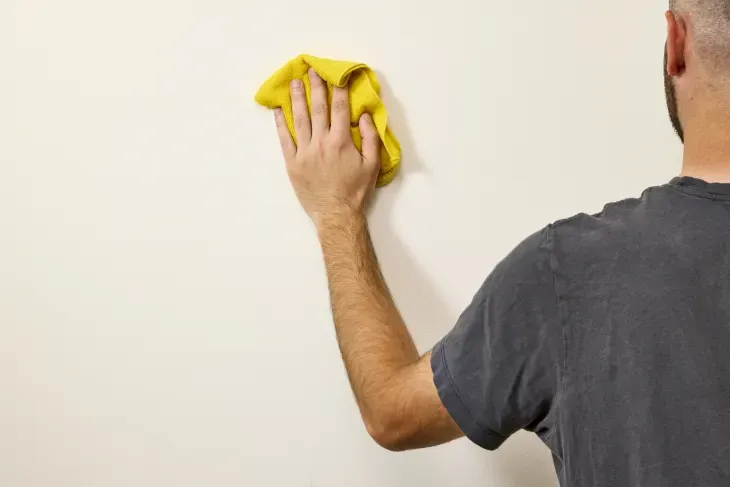
How to Clean Painted Walls Without Damaging the Finish
Painted walls naturally pick up marks over time.
Fingerprints, dust, food splashes, pet marks and everyday contact are especially common in hallways, kitchens, entryways and busy family rooms.
Cleaning these areas can help keep the home looking fresher, but using the wrong cleaner or scrubbing too aggressively may damage the paint finish.
A gentle approach is usually best.
Start With the Least Aggressive Method
When cleaning painted walls, begin with the mildest option.
For many everyday marks, a soft cloth or sponge with warm water may be enough.
If the mark remains, a small amount of mild detergent can often help.
Avoid immediately reaching for strong household cleaners.
The aim is to remove the mark without changing the appearance of the surrounding paint.
Test a Hidden Area First
Before cleaning a visible part of the wall, test your method somewhere inconspicuous.
This is particularly important if you are unsure which type of paint or finish is on the wall.
Some finishes are more resistant to cleaning than others.
A hidden test lets you see whether the cleaner causes dulling, colour transfer or another unwanted change.
Use a Soft Cloth or Sponge
Abrasive pads and rough scrubbing can damage painted surfaces.
Instead, use a soft cloth, microfibre cloth or non-abrasive sponge.
Work gently rather than pressing hard against the wall.
Repeated aggressive scrubbing can change the sheen or create a noticeably polished patch, particularly on flatter paint finishes.
Work in Small Sections
When washing larger wall areas, work in manageable sections rather than trying to clean the entire wall at once.
Keep the cloth or sponge damp rather than soaking wet and clean up drips as you go.
You do not need to saturate the wall.
Too much water can create its own problems, particularly around joins, repairs or areas where the surface may already be damaged.
Drying the area gently with a clean cloth can also help prevent streaking.
Pay Attention to the Paint Finish
Different paint finishes respond differently to cleaning.
Lower-sheen and matte surfaces may be more likely to show changes in appearance if scrubbed aggressively.
More durable washable finishes are often chosen for busy family areas because they are designed to handle regular cleaning better.
If you find yourself constantly trying to remove marks from a high-traffic wall, the paint finish itself may be worth reconsidering when the room is next repainted.
Be Careful Around Kitchens
Kitchen walls may collect grease and cooking residue.
These marks sometimes need more than plain water, but strong degreasers should still be used carefully.
Start with mild detergent and gently increase the cleaning strength only where necessary.
Test first.
The same principle applies around light switches and doorways, where oils from hands can gradually build up.
Do Not Paint Over Dirty Walls
If cleaning reveals that the wall really needs repainting, it still needs to be cleaned first.
Paint does not adhere properly to grease, dust and grime.
Painting straight over dirty marks can cause adhesion problems and may allow stains to show through the new finish.
Cleaning is part of the preparation process, not just general maintenance.
Watch for Mould
Mould is different from ordinary dirt.
If mould is appearing on painted walls, particularly in bathrooms, laundries or poorly ventilated areas, the cause should be investigated.
Moisture and ventilation problems may need attention before repainting.
Simply wiping mould away and painting over the area may only hide the problem temporarily.
Be Careful With Magic Erasers and Abrasive Products
Products that remove stubborn marks through abrasion can also affect painted finishes.
They may dull the surface or create a noticeable patch.
If you decide to use one, test it first and apply very little pressure.
In many cases, starting with warm water and mild detergent is safer.
Treat Stubborn Marks Carefully
Scuff marks, pencil, food splashes and hand marks do not all behave the same way.
If a mark does not come away easily, resist the temptation to scrub harder immediately.
Try repeating the gentle cleaning method first, allowing a little more time for the mild detergent to work. If a stronger product is needed, test it in an inconspicuous location before moving onto the visible area.
A small stubborn mark is usually better than a large shiny patch caused by over-cleaning.
Clean Small Marks Before They Build Up
Regular gentle cleaning can be easier on the paint than allowing grime to build up for months and then trying to scrub it all away in one session.
Wiping fingerprints and marks when you notice them helps prevent some stains from becoming harder to remove.
This is especially useful around doorways, hallway corners and switches.
Know When Cleaning Is No Longer Enough
Sometimes the paint itself has simply reached the point where cleaning will not restore the finish.
You may notice areas that are permanently scuffed, faded, chipped or worn through.
Repeated touch-ups can also become visible over time.
In those situations, repainting the full wall may provide a much cleaner result.
Choose the Right Finish Next Time
If you are repainting a busy area, consider how often the wall will need to be cleaned.
A more durable washable finish may be a better choice for hallways, kitchens, family rooms and children’s spaces.
The right paint choice can make everyday maintenance much easier.
Gentle Cleaning Helps Paint Last Longer
Painted walls do not need harsh cleaning to stay looking good.
Using a soft cloth, mild cleaner and gentle technique is often enough for ordinary household marks.
Test first, avoid abrasive scrubbing and pay attention to the condition of the paint.
Small amounts of regular maintenance can help painted surfaces stay fresher for longer.
