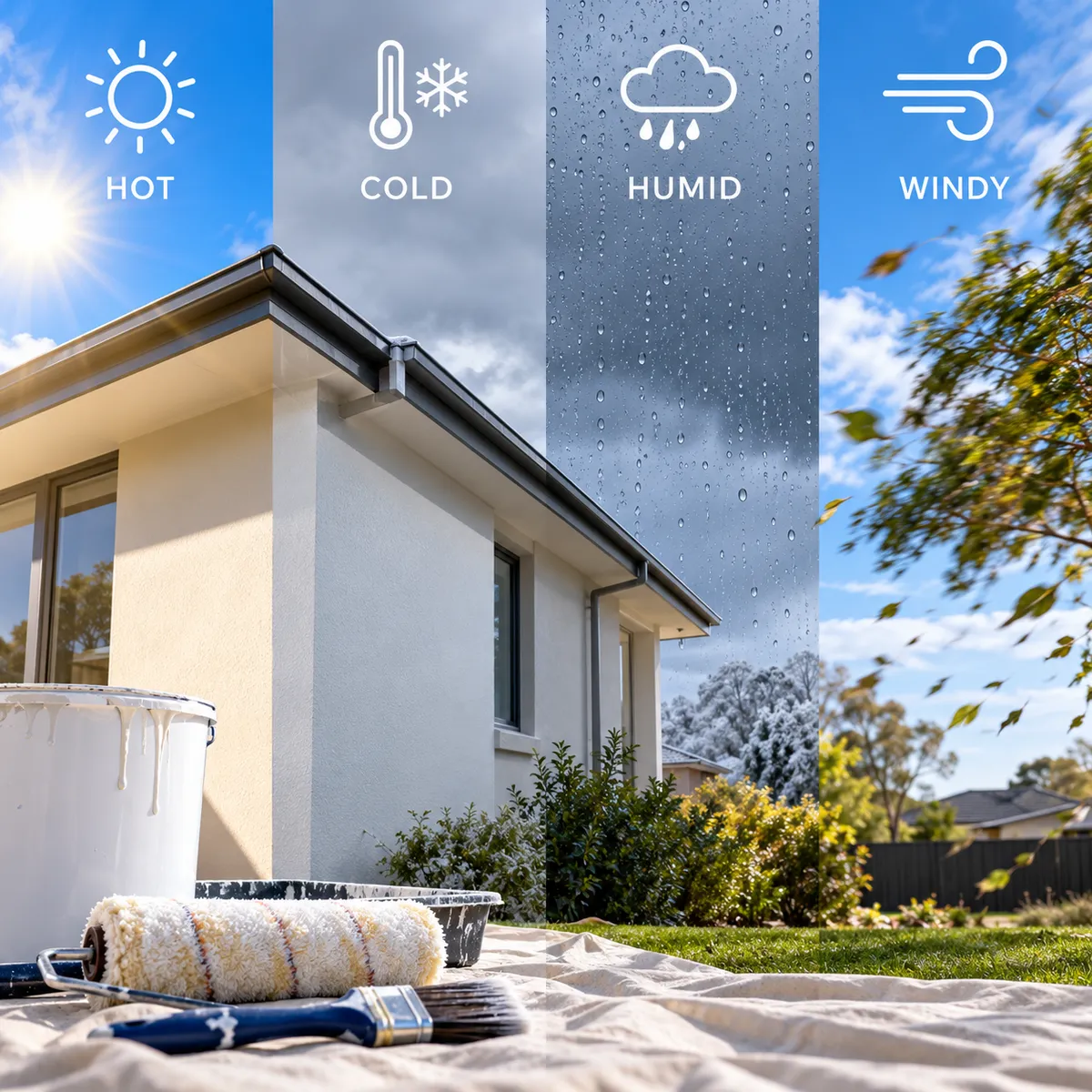
How Temperature and Weather Affect Painting
Temperature and weather can have a surprisingly big impact on how paint behaves.
Whether you are painting inside or outside, conditions such as heat, cold, humidity and moisture can affect how easily the paint applies, how quickly it dries and how well it adheres to the surface.
This is one of the reasons painting in the right conditions matters so much. Even a good-quality product can be difficult to work with if the temperature is too low, the wall is damp or the paint is drying too quickly.
Understanding a few basic factors can help you avoid common problems and get a smoother, more consistent result.
Cold Paint Can Become Harder to Work With
Paint that has been stored in a very cold garage or shed can become thicker than usual.
That can make it harder to spread evenly with a brush or roller and may affect how smoothly it flows across the surface.
If the paint feels unusually thick because it has been stored somewhere cold, bring it back to a more moderate room temperature before using it.
Giving the paint time to warm naturally can help it return to a more workable consistency.
It is also worth stirring it thoroughly before use, especially if it has been sitting for a while.
Cold Conditions Slow Drying
Lower temperatures generally slow down the drying process.
That matters because paint needs enough time to dry properly before the next coat is applied.
If another coat is added too soon, the finish may not settle properly and you can end up with problems such as:
Drag marks
Uneven texture
Soft or tacky areas
Poor adhesion
Longer overall curing time
This is particularly important for exterior painting where overnight temperatures may drop sharply.
A surface that felt dry in the afternoon may still be affected by cooler conditions later in the day.
Hot Conditions Can Dry Paint Too Quickly
At the other end of the scale, very hot weather can create its own problems.
When paint dries too quickly, it can become harder to maintain a smooth, even finish.
You may notice:
Roller marks
Brush marks
Lap lines
Patchy touch-ups
Uneven sheen
Difficulty blending sections together
This can happen because the paint starts drying before the surrounding area has been fully worked.
On larger walls, that can make it difficult to maintain what painters call a “wet edge”, where each new section blends into the previous one before it dries.
Hot walls can also cause paint to dry much faster than expected, especially on exterior surfaces exposed to direct sunlight.
Direct Sunlight Can Make a Big Difference
Even when the air temperature seems reasonable, a wall sitting in direct sunlight can become much hotter.
This is especially common on darker exterior surfaces.
Painting a wall that is hot to the touch can cause the paint to dry too quickly and may make application more difficult.
Professional painters often plan exterior jobs around the sun, working on shaded areas where possible and moving around the property as conditions change.
Timing can make a big difference to the finish.
Humidity Affects Drying
Humidity is another important factor.
When the air contains a lot of moisture, paint can take longer to dry.
This is because water-based paint relies partly on moisture evaporating as it dries.
In humid conditions, that evaporation can slow down.
High humidity can also make it harder to judge when a surface is truly ready for another coat.
A wall may feel dry to the touch but still be holding more moisture than expected.
Allowing extra drying time is often a sensible approach when conditions are humid.
Damp Surfaces Can Cause Problems
Painting over a damp surface is rarely a good idea.
Moisture can interfere with how well the paint bonds to the surface and may contribute to peeling, bubbling or blistering later.
This can be especially important on exterior walls after rain, or in areas where water tends to collect.
Before painting, make sure the surface is properly dry.
Common trouble spots include:
Around gutters
Near downpipes
Under eaves
Around windows
Bathrooms and laundries
Walls affected by leaks
If a surface keeps becoming damp, it is important to identify the cause rather than simply painting over it.
Rain Can Affect Exterior Painting
Exterior painting needs to be planned around the weather forecast.
If rain is expected before the paint has had enough time to dry, it can affect the finish and may wash, mark or damage the fresh coating.
The amount of drying time needed depends on the product and conditions.
This is why painters pay attention not only to the weather at the time of application, but also to what is expected later in the day.
A clear morning does not always mean ideal painting conditions if heavy rain is forecast for the afternoon.
Wind Can Also Affect the Job
Wind is sometimes overlooked, but it can influence exterior painting too.
Strong wind can cause paint to dry faster than expected and can blow dust, dirt, leaves or debris onto freshly painted surfaces.
That can leave marks or particles stuck in the finish.
Wind can also make working with drop sheets and equipment more difficult.
For exterior painting, calmer conditions generally make the job easier and more controlled.
Interior Conditions Matter Too
Weather does not only affect exterior painting.
Indoor temperature and ventilation can also influence drying.
For example, a room with poor airflow may take longer to dry, while strong airflow from fans or open windows can sometimes cause paint to dry too quickly in certain areas.
Heating and air conditioning can also change conditions inside the room.
The goal is usually a stable, comfortable environment without extreme heat, cold or moisture.
Paint Storage Matters
Where paint is stored can affect its condition before the job even begins.
Paint should generally be kept somewhere protected from extreme temperatures.
A shed or garage can become very hot in summer and very cold in winter, so it may not always be the best storage location.
Keeping paint in a more stable environment can help preserve its consistency.
It is also important to make sure containers are sealed properly so unnecessary air does not get inside.
Follow the Product Recommendations
Different paints are designed to work within specific temperature and application ranges.
The manufacturer's instructions are always the best guide for the product you are using.
These recommendations may include information about:
Minimum application temperature
Maximum application temperature
Drying time
Recoat time
Humidity
Surface preparation
Ignoring these guidelines can increase the chance of poor results.
Good Timing Helps Create a Better Finish
Painting is not just about choosing the right colour or product.
The conditions on the day can make a real difference to how the paint applies and dries.
Cold conditions can slow drying, hot conditions can make paint dry too quickly, humidity can delay curing and damp surfaces can interfere with adhesion.
Taking the weather into account can help avoid unnecessary problems and lead to a cleaner, longer-lasting finish.
And if you would rather leave the timing, preparation and application to someone who knows how to work around changing conditions, Rob’s Painting & Decorating can help with both interior and exterior painting.
